At no extra cost to you, some or all of the products featured below are from partners who may compensate us for your click. It's how we make money. This does not influence our recommendations or editorial integrity, but it does help us keep the site running. Read our full Disclosure.
When you hear the term “hedging,” it might conjure up images of a gardening enthusiast meticulously trimming their bushes.
However, in the world of finance and investing, hedging holds an entirely different meaning—one that is essential for anyone looking to protect their investment portfolio from unpredictable market risks.
Although the concept of hedging can sound complex or intimidating, it’s a strategy that every investor, from beginners to seasoned professionals, should understand and consider.
Understanding Hedging: A Form of Financial Insurance
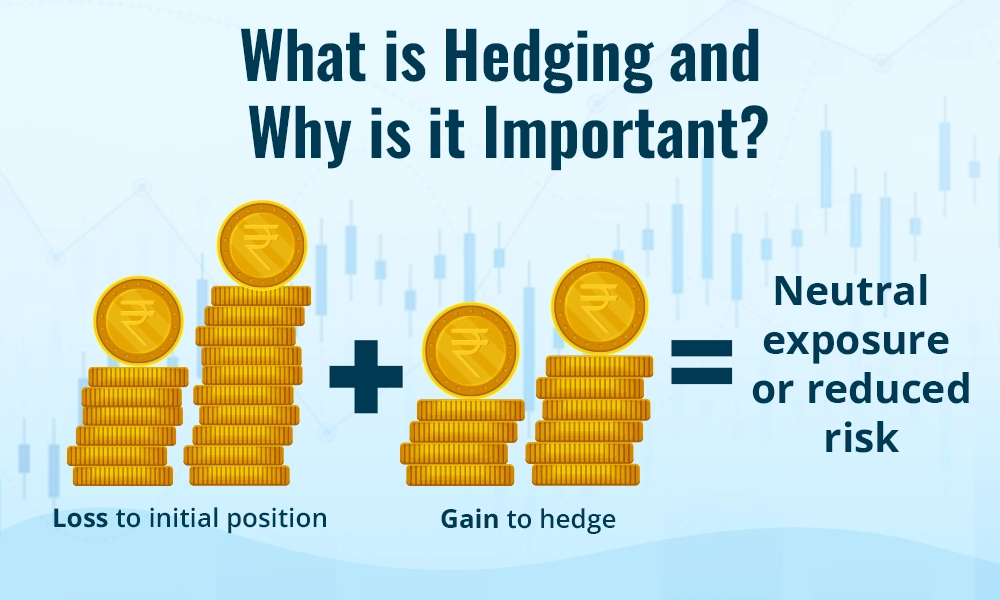
At its core, hedging is a way to protect your portfolio against potential losses, much like how insurance protects your home or car from unforeseen damage. When investors hedge, they are essentially buying a type of insurance that reduces the financial impact if an adverse event occurs. It doesn’t prevent negative events from happening, but it helps soften the blow when they do.
To put it simply, think of hedging as a safeguard against risk. Just like purchasing homeowner’s insurance protects you from losses due to fire, theft, or natural disasters, hedging protects your investments from unfavorable market movements. Portfolio managers, individual investors, and corporations alike use hedging strategies to reduce their exposure to risks and uncertainties in financial markets.
How Does Hedging Work?
Unlike traditional insurance where you pay a regular premium to an insurer for guaranteed compensation, hedging involves using financial instruments or market strategies to offset the risks associated with your investments. In practical terms, investors hedge one investment by making an offsetting trade in another security or derivative that has a negative correlation with the original investment.
For example, if you own shares of a company—let’s call it XYZ Corporation—you could buy a put option. A put option gives you the right to sell shares at a specific price, known as the strike price. If XYZ’s stock price falls dramatically, the value of your put option increases, offsetting some or all of your losses from the shares you own. This strategy effectively reduces your downside risk while allowing you to participate in any potential gains above the strike price.
However, like insurance, hedging isn’t free. You must pay a cost, such as the premium for the option, and there is often a trade-off where your potential profit may be reduced because of the hedge.
The Role of Derivatives in Hedging
Two of the most common financial instruments used for hedging are options and futures contracts, collectively known as derivatives. These instruments derive their value from an underlying asset like stocks, commodities, interest rates, or currencies.
Derivatives allow investors to create complex trading strategies where losses in one investment are counterbalanced by gains in another. Let’s revisit the example of a company called Cory’s Tequila Corporation (ticker symbol: CTC). Suppose you own CTC stock and believe in its long-term prospects, but you’re concerned about short-term declines in the tequila market.
To hedge this risk, you could buy a put option on CTC, which protects you if the stock price drops below the strike price. This specific hedge is often referred to as a “married put.” If the stock price plummets, your losses on the shares are offset by gains from the put option.
Similarly, suppose CTC depends heavily on agave—the key ingredient in tequila—and is worried about fluctuations in agave prices. If the price of agave were to soar unexpectedly, it would hurt the company’s profits. To protect against this, CTC can enter into a futures contract to buy agave at a predetermined price at a future date.
This futures contract enables the company to budget and plan without worrying about volatile agave prices. If prices rise above the contract price, the hedge saves the company money. If prices fall below the contract price, however, the company is still obligated to pay the higher price, which means they could have been better off not hedging.
What Can Be Hedged?
One of the great advantages of hedging is its versatility. Investors can hedge nearly any type of investment risk, including stocks, commodities, interest rates, currencies, and more. The variety of options and futures contracts available provides investors with the flexibility to protect themselves against a wide range of market uncertainties.
For example, a multinational company might hedge foreign exchange risk to protect against adverse currency movements. An airline company could hedge fuel costs to stabilize expenses in the face of fluctuating oil prices. Even individual investors can use hedging to shield their portfolios from broad market downturns or specific sector risks.
The Cost and Limitations of Hedging
It’s important to understand that every hedging strategy comes with a cost, and these costs should be carefully considered before implementation. The goal of hedging is not to generate profits but to reduce the severity of potential losses.
The costs might come in various forms:
- Premiums for options: Like insurance, you pay upfront to gain protection.
- Opportunity costs: If your hedge protects against losses, it may also cap your potential gains.
- Contract obligations: Futures contracts lock you into buying or selling an asset at a certain price, regardless of how market prices move.
Unlike traditional insurance, which often fully compensates for a loss, hedging doesn’t guarantee perfect protection. It’s a balancing act that aims to reduce risk, not eliminate it entirely. Market conditions, timing, and execution all influence how effective a hedge can be.
Hedging Is Not a Perfect Science
Even with sophisticated financial models and risk management teams, achieving the “perfect hedge” is very difficult. Market behavior can be unpredictable, and correlations between assets may change over time, reducing the effectiveness of hedging strategies.
That said, understanding the basics of hedging empowers investors to make smarter decisions about managing risk. It moves investing beyond speculation and toward more deliberate financial planning.
Why Investors Should Learn About Hedging
You don’t need to be a Wall Street professional to benefit from understanding hedging. Whether you’re a beginner or experienced investor, knowing how to protect your investments against downside risk is crucial for long-term financial success.
Hedging helps you:
- Limit downside risk: Protect against large losses during market downturns.
- Manage uncertainty: Navigate volatile markets with greater confidence.
- Plan effectively: Budget for costs and risks with more certainty.
By learning the fundamentals of hedging, you bring Wall Street concepts down to Main Street and take greater control over your financial future.
Conclusion
Hedging is a powerful tool that serves as a form of insurance against financial loss. Through strategic use of financial instruments like options and futures, investors can offset risks in their portfolios and reduce the impact of adverse market events.
While it’s not free and not perfect, hedging remains an essential part of modern investing and risk management. By understanding its principles and applications, you can build a more resilient investment strategy designed to withstand the ups and downs of the markets.
Take the time to learn about hedging, evaluate your own financial situation, and consider whether incorporating hedging strategies makes sense for your portfolio. Protecting your investments is just as important as growing them, and hedging provides a valuable approach to doing just that.